California Association of Social Rehabilitation Agencies
Newsletter | January 15, 2026
Highlights and Spotlights

Welcome to the CASRA Newsletter

In this issue:

-a program that provides foster care for pets of people in recovery

-testing a new approach to mental health emergencies

-a growing number of sheriffs no longer respond to mental health calls

-research indicating that as involuntary hospitalizations expand, there is an elevated suicide risk

Enjoy!


If you have news you would like to share or a colleague you would like to spotlight because of the great work they do or just because they are a great person or both, let us know by contacting joe@casra.org.

CASRA Member Agency Learning Opportunities

A benefit of membership in CASRA is receiving four hours of training for your staff. For more information, please contact joe@casra.org


If you are a CASRA member agency and would like to advertise your learning opportunity, training or event for the benefit of other CASRA member agencies, please contact us at events@casra.org.
There are a few guidelines:
-You are a CASRA Member Agency
-Your event is free of charge
and, as a reminder the Newsletter is published on the 1st and 3rd Thursdays of the month

Photo Gallery

A Photo Gallery now resides on the EVENTS page of the CASRA website and currently consists of albums of the 2024 Spring and the 2025 Fall CASRA Gatherings. We plan on adding more albums in the future.

If you have photos of your agency's events you would like to share with other CASRA members, contact joe@casra.org.

To view the current albums in the Photo Gallery, CLICK HERE.

CASRA Learning Library

The  CASRA Learning Library and its contents are free to CASRA member organizations and their staff. The Library is located in the Member Portal on the CASRA website here. More detailed instructions on how to access and use the Library can also be found on the CASRA website when logged on the Portal.

Our hope is that the Library's offerings will provide learning opportunities that will serve as part of CASRA agencies' onboarding processes for new staff, as well as be a resource of Recovery oriented values and practices for all staff. 

Access to the Learning Library is currently limited to CASRA member agencies and their staff. We hope to expand availability in the future.

For questions and more information contact Joe Ruiz - joe@casra.org.

CASRA Member Agency Employment Opportunities and Information

Our member agencies are continually looking for new employees or volunteers to join their workforce.

To see current openings and find out additional information about CASRA Member Agencies, please click below.

CASRA Member Agency Support Groups

CASRA facilitates a number of support groups for people working at CASRA member agencies. The support groups provide people working in similar roles opportunities to share experiences, information, and challenges. They meet monthly for approximantely one hour. for more information contact the person listed for each group.

Social Rehabilitation Facilities (SRF)
Meets: First Tuesday of the month at 1 PM

Human Resources
Meets: First Thursday of the month at 11 AM

Employment/Vocational Rehabilitation Services
Meets: First Thursday of the month at 3 PM

For information regarding any of the above groups contact:
Chad Costello, chad@casra.org

Wellness Services (Well Talk)
The Wellness Services support group is now online. For more info contact Joe Ruiz, joe@casra.org

Who We Are

CASRA is a statewide organization of private, not-for-profit, public benefit corporations that serve clients of the California public mental health system.

Member agencies provide a variety of services that are designed to enhance the quality of life and community participation of youth, adults and older adults living with challenging mental health issues. Read more

Contact Us

The California Association of Social Rehabilitation Agencies

Mailing Address:
3350 E. 7th Street, #509
Long Beach, CA 90804

Email: casra@casra.org

Phone: (562) 343-2621

To reach us: use our Contact Form
Advocacy/Policy/News

Colorado Program Finds Foster Care for People’s Pets as They Recover From Addiction, Abuse, Mental Health Issues

Pawsitive Recovery Launched in Denver and Is So Popular the SPCAU Is Looking To Expand It Across the Country

From denverpost.com
By Elizabeth Hernandez, January 1, 2026

When Ashlee Chaidez’s black Lab mix, Duck, charged toward her and rubbed his face — a little more gray than the last time she had seen him — against her cheek, she knew her struggles over the past several months had been worth it.
Six months ago, Chaidez, 27, and 6-year-old Duck were living out of her car around the Front Range. Chaidez dropped Duck off at doggy daycare to get him out of the summer heat while she delivered orders for Instacart, narrowly earning the money to board her beloved dog.

Chaidez barely broke even financially, was off her mental health medication and needed help, she said. But the thought of giving up Duck — her best friend and reason for getting up in the morning — while she sought inpatient psychiatric care was a blow that felt insurmountable.

After reaching out to animal shelters, Chaidez learned about a program through the Society for the Prevention of Cruelty to Animals International that finds foster caregivers for people’s pets while they recover from addiction, abuse or mental health problems. Read More


She Goes To Police Calls in a Prius. It’s Part of a New Approach to Mental Health Emergencies

From latimes.com
By Cayla Mihalovich, December 25, 2025

Briana Fair, a mental health clinician with the San Mateo Police Department, received a dozen voicemails from the same distressed caller over a single weekend this month. She knew the voice. It was her client, saying that a celebrity has been hacking her phone, that she needed help moving into a different apartment and why was the process taking so long?

“Normally, she won’t call like this unless she’s starting to get towards a crisis,” Fair said.

If Fair keeps her close, it will ensure she is connected with the services she needs and prevent her from calling 911 dispatch, reducing the possibility of a full-blown crisis involving officers or unnecessary hospitalizations. Read More


Growing Number of California Sheriffs No Longer Respond to Mental Health Calls

A Shift Away From Police-Led Responses Spreads, but Gaps in Crisis Teams Leave Some Communities Exposed

From theguardian.com
By Victoria Clayton, January 2, 2026

In the past year, a handful of sheriff’s departments in California have started refusing to respond to 911 calls that involve a mental health crisis, but where no crime has been reported.

In February, the Sacramento sheriff, Jim Cooper, announced that his deputies would only respond to mental health crises if a crime had been committed or was in process, or if someone other than the person in crisis was in imminent danger. Down in San Diego county, the police chief for the city of El Cajon, Jeremiah Larson, made a similar policy decision in May
Several other law enforcement agencies in the state, including the Ventura county sheriff’s office and the Long Beach police department have said their officers will respond to every call, but they may not stay if no crime is happening and the person in crisis does not pose a threat to other people. Read More


As States Expand Psychiatric Detention, Research Shows Elevated Suicide Risk

From madinamerica.com
By Richard Sears, January 10, 2026

Involuntary psychiatric detention has been sold to the public as a compassionate act intended to stop people that are experiencing mental health crises from harming themselves or others. Yet, despite mounting evidence that has linked involuntary psychiatric “treatment” to both increased suicide rates and violence, and research showing a lack of efficacy for this type of “care,” many states in the US are currently ramping up psychiatric imprisonment programs.

In 2022, then mayor of New York City, Eric Adams, announced a plan to expand involuntary psychiatric “treatment”. This expansion of psychiatric detention was echoed in 2025 by New York State Governor Kathy Hochul. Oregon has also recently expanded involuntary “care” initiatives, despite experts’ calls for rights-based approaches in mental healthcare. Under the guise of compassion, California has implemented “CARE’ courts, designed to funnel people experiencing mental health crises into voluntary treatment. However, refusal to comply with “voluntary” treatment through these programs can escalate proceedings, leading to psychiatric detention and involuntary “care.” Most troubling, a 2025 executive order directs states to ramp up psychiatric detention.
A new study published in The Lancet Regional Health: Europe adds yet more evidence for potential harms stemming from psychiatric detention. The current work, led by Leoni Grossman from the Karolinska Institutet in Sweden, finds that people receiving involuntary psychiatric “treatment” are significantly more likely to commit suicide compared to both the general population and those receiving voluntary psychiatric care. Additionally, the current research finds that people dying from suicide were more often younger, male, single, and diagnosed with personality and substance use disorders. Those dying from suicide were also more likely to have a history of self-harm and involuntary psychiatric detention. Read More


If you or someone you know is considering suicide or self-harm, there are resources available to provide free and confidential support. Call 988 or the Teen Line at 1-800-TLC-TEEN or The Trevor Project at 1-866-488-7386 for LGBTQ young people.

Trainings/Conferences and other Learning Opportunities

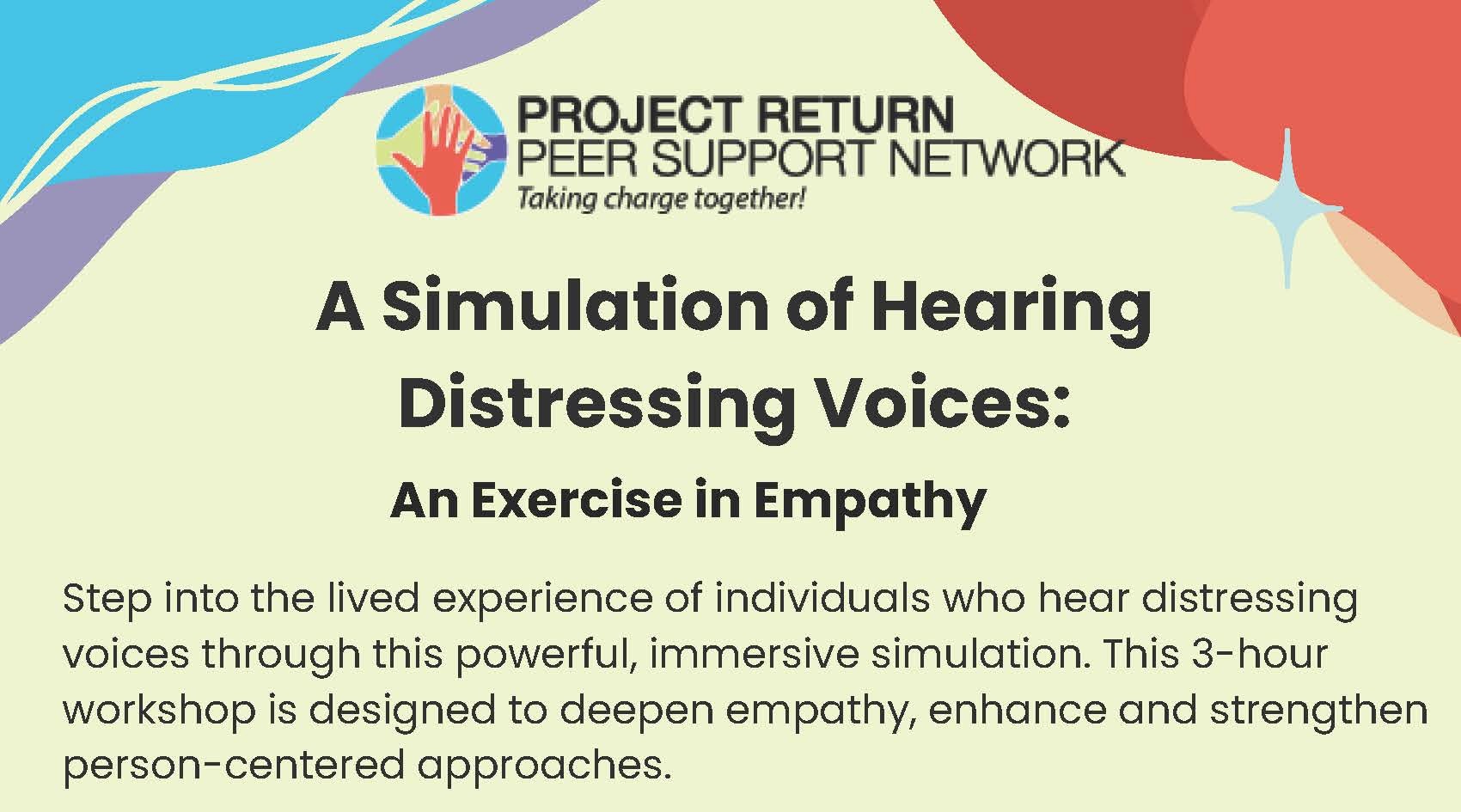
Project Return Peer Support Network (PRPSN) Earns WRAP Center of Distinction Certification

CASRA member agency Project Return Peer Support Network (PRPSN) is now a licensed WRAP Provider and affiliate of Advocates for Human Potential and has been officially recognized as a WRAP Center of Distinction.

This prestigious designation highlights PRPSN’s commitment to excellence in delivering Wellness Recovery Action Plan (WRAP) Seminars and supporting recovery-oriented practices. PRPSN's Training Institute is now a leading provider of WRAP Seminars across the West Coast, helping individuals and organizations build wellness tools that foster hope, personal responsibility, and empowerment.

For more information or to schedule a WRAP Seminar, please contact PRPSN's Training Coordinator, Gustavo Limas at glimas@prpsn.org.


Learn More

Final Thoughts

You know how I always dread the whole year? Well, this time I'm only going to dread one day at a time.

Charlie Brown


Previous | Next