California Association of Social Rehabilitation Agencies
Newsletter | February 19, 2026
Highlights and Spotlights

Welcome to the CASRA Newsletter

In this issue:

- Remembering John Travers

-Contemporary McMindfulness

-A podcast on redefining recovery from Schizophrena which includes Dr. Mark Ragins

Enjoy!


If you have news you would like to share or a colleague you would like to spotlight because of the great work they do or just because they are a great person or both, let us know by contacting joe@casra.org.

CASRA Member Agency Learning Opportunities

A benefit of membership in CASRA is receiving four hours of training for your staff. For more information, please contact joe@casra.org


If you are a CASRA member agency and would like to advertise your learning opportunity, training or event for the benefit of other CASRA member agencies, please contact us at events@casra.org.
There are a few guidelines:
-You are a CASRA Member Agency
-Your event is free of charge
and, as a reminder the Newsletter is published on the 1st and 3rd Thursdays of the month

Photo Gallery

A Photo Gallery now resides on the EVENTS page of the CASRA website and currently consists of albums of the 2024 Spring and the 2025 Fall CASRA Gatherings. We plan on adding more albums in the future.

If you have photos of your agency's events you would like to share with other CASRA members, contact joe@casra.org.

To view the current albums in the Photo Gallery, CLICK HERE.

CASRA Learning Library

The  CASRA Learning Library and its contents are free to CASRA member organizations and their staff. The Library is located in the Member Portal on the CASRA website here. More detailed instructions on how to access and use the Library can also be found on the CASRA website when logged on the Portal.

Our hope is that the Library's offerings will provide learning opportunities that will serve as part of CASRA agencies' onboarding processes for new staff, as well as be a resource of Recovery oriented values and practices for all staff. 

Access to the Learning Library is currently limited to CASRA member agencies and their staff. We hope to expand availability in the future.

For questions and more information contact Joe Ruiz - joe@casra.org.

CASRA Member Agency Employment Opportunities and Information

Our member agencies are continually looking for new employees or volunteers to join their workforce.

To see current openings and find out additional information about CASRA Member Agencies, please click below.

CASRA Member Agency Support Groups

CASRA facilitates a number of support groups for people working at CASRA member agencies. The support groups provide people working in similar roles opportunities to share experiences, information, and challenges. They meet monthly for approximantely one hour. for more information contact the person listed for each group.

Social Rehabilitation Facilities (SRF)
Meets: First Tuesday of the month at 1 PM

Human Resources
Meets: First Thursday of the month at 11 AM

Employment/Vocational Rehabilitation Services
Meets: First Thursday of the month at 3 PM

For information regarding any of the above groups contact:
Chad Costello, chad@casra.org

Wellness Services (Well Talk)
The Wellness Services support group is now online. For more info contact Joe Ruiz, joe@casra.org

Who We Are

CASRA is a statewide organization of private, not-for-profit, public benefit corporations that serve clients of the California public mental health system.

Member agencies provide a variety of services that are designed to enhance the quality of life and community participation of youth, adults and older adults living with challenging mental health issues. Read more

Contact Us

The California Association of Social Rehabilitation Agencies

Mailing Address:
3350 E. 7th Street, #509
Long Beach, CA 90804

Email: casra@casra.org

Phone: (562) 343-2621

To reach us: use our Contact Form
Advocacy/Policy/News

In Memory

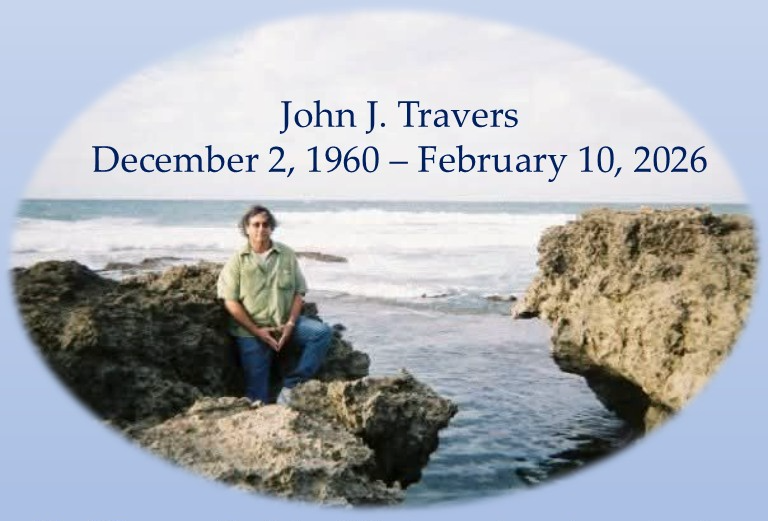
John Travers, John T, JT was generous, loving, kind, cranky, private, had a wicked sense of humor, and was so humble that he didn’t even know the impact he had on people’s lives. He was a curious, inquisitive, person who was always trying to better himself, and by doing so made those around him better as well.

He made people feel safe, connected and included through his words and his deeds.

His saw and treated those he served as companions on the same path, that showed his respect, belief and confidence in their ability to learn and grow.

John T was a mentor and a friend. He continually impressed his colleagues with his wisdom and storytelling especially when it was about his personal journey. He was a gifted trainer who didn’t like the term trainer. He was more of a guide who was able to lead people so gently and with passion to their “ah-ha” moments. He respected learning and especially the learners.

His sense of humor was part self-effacing, sometimes wise guy, creative, at times at a whisper to one person, other times a shout to a whole room. He was known for his “John-isms” that would make administration nervous and hit the point dead on, like “open my kimono”, “eat the fish and leave the bones”, and others that will be left for another time. As one colleague put it, “knowing him, he’d probably make a joke about his own death.”

JT was a longtime supporter CASRA, a member and chair of its Conference Committee, and learning sessions facilitator. He worked for over 25 years in the behavioral health field, was employed by Mental Health America of Los Angeles at the Village, Long Beach Wellness Center, and in Training and Workforce Development. He also served on the Board of Project Return Peer Support Network, and was later employed as a Project Director. He was a Navy veteran and an electrician by training.

John left this life on February 10th, 2026 as a result of health complications.

From another colleague, "It sounds so unbelievable because he was just a force of life. Some people embody life so completely that they cannot die. John is definitely one of those people."

He was loved by those who were able to share their world with him. To paraphrase what one person said, “Your loss ripples through so many hearts, John T. I hope you know that.”

From those who knew and loved you.

Rest easy, friend.


Does Contemporary “McMindfulness” Reinforce Our Suffering?

A Buddhist Teacher and Professor Argues That a Commodified Mindfulness Solely Focused on the Self Is Only a Stopgap Fix.

From mindsitenews.org

By Courtney Wise, February 11, 2026

What’s the point in modern mindfulness? Popular apps like Calm and Headspace promote a practice that “is nothing more than basic concentration training,” says Ronald Purser, author of “McMindfulness: How Mindfulness Became the New Capitalist Spirituality.”
Part of the book’s argument is that mindfulness has been commodified and co-opted into little more than a pacifier shushing us amidst intolerable, overwhelming conditions, as Purser explains in a Q&A with The New Yorker?s Jay Caspian Kang.

Rather than apply the practice in full – including its demands to “go beyond self-interest” – Western practitioners use mindfulness to remain isolated, disconnected and inwardly focused, he says. Read More


Podcast: Redefining Recovery in Schizophrenia

From psychcentral.com
By Rachel Star Withers January 21, 2026

For decades, the narrative surrounding schizophrenia has focused almost exclusively on controlling symptoms. But with no cure, can someone actually get better? Recovery in the context of schizophrenia isn’t about the absence of symptoms. It’s a deeply personal process — one that centers on restoring hope, self-determination, and a meaningful life, even when hallucinations, delusions, and setbacks continue to exist.

In this episode, host Rachel Star Withers, who lives openly with schizophrenia, and co-host Gabe Howard explore what recovery really means for people with serious mental illness. From clinical symptom remission and functional abilities to redefining purpose and identity, they unpack how recovery can look — and why it rarely fits the “back to normal” expectation held by loved ones and society.

Later in the episode, Dr. Mark Ragins, who is a pioneer and leading voice in person-centered, recovery-based psychiatry, joins the conversation. He shares insights from decades of working with some of the most underserved and difficult-to-engage individuals, introduces practical frameworks like the psychosis triangle, and challenges illness-centered models of care.
Listen to the Podcast/Read the Transcript


If you or someone you know is considering suicide or self-harm, there are resources available to provide free and confidential support. Call 988 or the Teen Line at 1-800-TLC-TEEN or The Trevor Project at 1-866-488-7386 for LGBTQ young people.

Trainings/Conferences and other Learning Opportunities

Project Return Peer Support Network (PRPSN) Earns WRAP Center of Distinction Certification

CASRA member agency Project Return Peer Support Network (PRPSN) is now a licensed Wellness Recovery Action Plan (WRAP) Provider and affiliate of Advocates for Human Potential and has been officially recognized as a WRAP Center of Distinction.

This prestigious designation highlights PRPSN’s commitment to excellence in delivering (WRAP) Seminars and supporting recovery-oriented practices. PRPSN's Training Institute is now a leading provider of WRAP Seminars across the West Coast, helping individuals and organizations build wellness tools that foster hope, personal responsibility, and empowerment.

For more information or to schedule a WRAP Seminar, please contact PRPSN's Training Coordinator, Gustavo Limas at glimas@prpsn.org.


Learn More

Final Thoughts

For JT

"There are no goodbyes for us.
Wherever you are, you will always be in my heart.” 

Mahatma Gandhi


Previous | Next