California Association of Social Rehabilitation Agencies
Newsletter | August 6, 2026
Highlights and Spotlights

Welcome to the CASRA Newsletter

In this issue:

-Save the dates for the CASRA Learning Series!

- Housing First has failed? Not so fast

-New study questions mental health treatment mandate

- SF Fire Department announces it will cut peer counselors from street crisis teams

-Sober living gyms and hangouts aid addiction recovery

Enjoy!


If you have news you would like to share or a colleague you would like to spotlight because of the great work they do or just because they are a great person or both, let us know by contacting joe@casra.org.

CASRA Member Agency Learning Opportunities

A benefit of membership in CASRA is receiving four hours of training for your staff. For more information, please contact joe@casra.org


If you are a CASRA member agency and would like to advertise your learning opportunity, training or event for the benefit of other CASRA member agencies, please contact us at events@casra.org.
There are a few guidelines:
-You are a CASRA Member Agency
-Your event is free of charge
and, as a reminder the Newsletter is published on the 1st and 3rd Thursdays of the month

Photo Gallery

A Photo Gallery now resides on the EVENTS page of the CASRA website and currently consists of albums of the 2024 Spring and the 2025 Fall CASRA Gatherings. We plan on adding more albums in the future.

If you have photos of your agency's events you would like to share with other CASRA members, contact joe@casra.org.

To view the current albums in the Photo Gallery, CLICK HERE.

CASRA Learning Library

The  CASRA Learning Library and its contents are free to CASRA member organizations and their staff. The Library is located in the Member Portal on the CASRA website here. More detailed instructions on how to access and use the Library can also be found on the CASRA website when logged on the Portal.

Our hope is that the Library's offerings will provide learning opportunities that will serve as part of CASRA agencies' onboarding processes for new staff, as well as be a resource of Recovery oriented values and practices for all staff. 

Access to the Learning Library is currently limited to CASRA member agencies and their staff. We hope to expand availability in the future.

For questions and more information contact Joe Ruiz - joe@casra.org.

CASRA Member Agency Employment Opportunities and Information

Our member agencies are continually looking for new employees or volunteers to join their workforce.

To see current openings and find out additional information about CASRA Member Agencies, please click below.

CASRA Member Agency Support Groups

CASRA facilitates a number of support groups for people working at CASRA member agencies. The support groups provide people working in similar roles opportunities to share experiences, information, and challenges. They meet monthly for approximantely one hour. for more information contact the person listed for each group.

Social Rehabilitation Facilities (SRF)
Meets: First Tuesday of the month at 1 PM

Human Resources
Meets: First Thursday of the month at 11 AM

Employment/Vocational Rehabilitation Services
Meets: First Thursday of the month at 3 PM

For information regarding any of the above groups contact:
Chad Costello, chad@casra.org

Wellness Services (Well Talk)
The Wellness Services support group is now online. For more info contact Joe Ruiz, joe@casra.org

Who We Are

CASRA is a statewide organization of private, not-for-profit, public benefit corporations that serve clients of the California public mental health system.

Member agencies provide a variety of services that are designed to enhance the quality of life and community participation of youth, adults and older adults living with challenging mental health issues. Read more

Contact Us

The California Association of Social Rehabilitation Agencies

Mailing Address:
3350 E. 7th Street, #509
Long Beach, CA 90804

Email: casra@casra.org

Phone: (562) 343-2621

To reach us: use our Contact Form

Social Media

Visit us on Instagram and Linkedin

 CASRA | Instagram  CASRA | Linkedin
Advocacy/Policy/News

SAVE THE DATES!
CASRA LEARNING SERIES 2026 - 27

October 7th, November 4th, January 6th, February 3rd, March 3rd, April 7th

CLICK HERE FOR MORE INFORMATION


Housing First Has Failed? Not So Fast

Behind the Political Attacks on Housing First Is a Housing Affordability Crisis the Administration Would Rather Not Talk About

From invisiblepeople.tv
By Robert Davis | July 31, 2026

Listening to President Donald Trump and some of his administration allies might leave someone with the impression that Housing First doesn’t work.

Housing and Urban Development Secretary Scott Turner declared that Housing First had “failed” in a press release announcing that the U.S. recorded its first national decline in homelessness since 2016. There are also Trump-supporting groups like the Cicero Institute and right-wing personalities like Jillian Michaels who constantly claim Housing First is making homelessness worse.

The problem with this claim is that it conflates what people see on the streets with what is happening behind the scenes. It assumes that if street homelessness is rising, then Housing First is not working. But experts tell Invisible People that is not the case.

In fact, Housing First continues to improve housing stability, health, and economic opportunities for people leaving homelessness. These successes are not only captured in scientific studies but are also evident in the stories of people living in Housing First units. Read More


New Study Torpedoes Mental Health Treatment Mandate

The First-Of-Its-Kind Evaluation of Kendra’s Law Was Commissioned at the Direction of the State Legislature

From politico.com

By Maya Kaufman, August 3, 2026

A new evaluation of court-mandated treatment for mentally ill New Yorkers found the system’s harms outweigh its benefits.

Researchers compared the outcomes of people who were forced into outpatient mental health treatment under state law and individuals who received similar services voluntarily. In both cases, they found positive outcomes, including significant improvements in people’s ability to function, shorter hospital stays and a reduced risk of harm to others.

The people who voluntarily sought treatment were less likely to be arrested and had fewer hospitalizations for mental health issues, according to the study of Kendra’s Law, which authorizes treatment orders for seriously mentally ill people who are unlikely to voluntarily undergo care and are a danger to themselves or others.

The researchers uncovered “quite disturbing” results among people who went through assisted outpatient treatment under Kendra’s Law, according to study co-author Nev Jones, a University of Pittsburgh social worker. Dozens of participants said they were desperate for assistance and unaware of alternatives — contradicting the state’s portrayal of Kendra’s Law as a solution for people who refuse to follow treatment plans or accept services. Read More


S.F. Fire Dept. Quietly Announced It Will Cut Peer Counselors From Street Crisis Teams

This San Francisco Initiative Made Headlines for Its Innovative Response to Mental Health Calls. Now, the City Is Quietly Rolling It Back

From missionlocal.org
By Annelise Bowers, July 30, 2026

When Amelia Harmon arrived at the scene of the 911 call, an ambulance, several police cars and a mental health clinician were gathered around an apartment building, at a standstill.

At the top of the outside staircase, there was a woman holding a baseball bat, screaming and crying. Around the stairs, police officers and EMTs stood at a safe distance, unable to approach because the woman was armed.

Harmon stepped forward, introduced herself to the woman, and began walking up, following de-escalating tactics and asking the woman what was wrong.

“She said, ‘If there’s anything I need, it’s a hug,’” Harmon said. “I’m not sworn staff. I am non-uniformed, and I can walk up there and hug her. So I did.”

The woman dropped the bat and took the hug. Read More


Sober Living Gyms and Hangouts Aid Addiction Recovery

Sober Spaces, the “Third Spaces” Supporting Addiction Recovery

From mindsitenews.org
By Courtney Wise, July 29, 2026

People seeking addiction treatment in the United States have long had just two options: clinical treatment or a 12-step program. That’s largely because these programs work, with millions achieving sobriety through such evidence-based support. But, like anything, both paths have limitations. Neither can magically make longtime associates struggling with addiction disappear, and in some cases, 12-step programs can feel “a little judgy,” says Kylie Corbitt, who tried both to overcome an addiction to methamphetamine. Upon completing a 30-day inpatient program, she realized that everyone she knew was still using, she told the New York Times. Alcoholics Anonymous didn’t provide the help she expected either. Besides feeling judged, she never found fellowship in a program that emphasized drawing strength from a higher power alongside total abstinence.

Now two years sober, Corbitt credits her ability to stay on track to the Phoenix, a no-cost rock climbing gym and recovery community where members have to be 48 hours sober before every visit and fitness and healthy routines are the foundation of her relationships. “We’re not sitting there talking about addiction all day,” Corbitt said. “We’re talking about getting healthy and getting better.”
Sober spaces like the Phoenix aren’t new, but they’re having what Dr. John Kelly, director of the Recovery Research Institute at Mass General Brigham, calls “a renaissance.” The Recovery Café Network, which offers free meals and coffee, grew from less than 2 dozen locations in 2020 to 92 by 2025. The Phoenix has seen similar exponential growth with member enrollments leaping from 20,000 to more than 433,000 over the same period. Read More


If you or someone you know is considering suicide or self-harm, there are resources available to provide free and confidential support. Call 988 or the Teen Line at 1-800-TLC-TEEN or The Trevor Project at 1-866-488-7386 for LGBTQ young people.

Trainings/Conferences and other Learning Opportunities

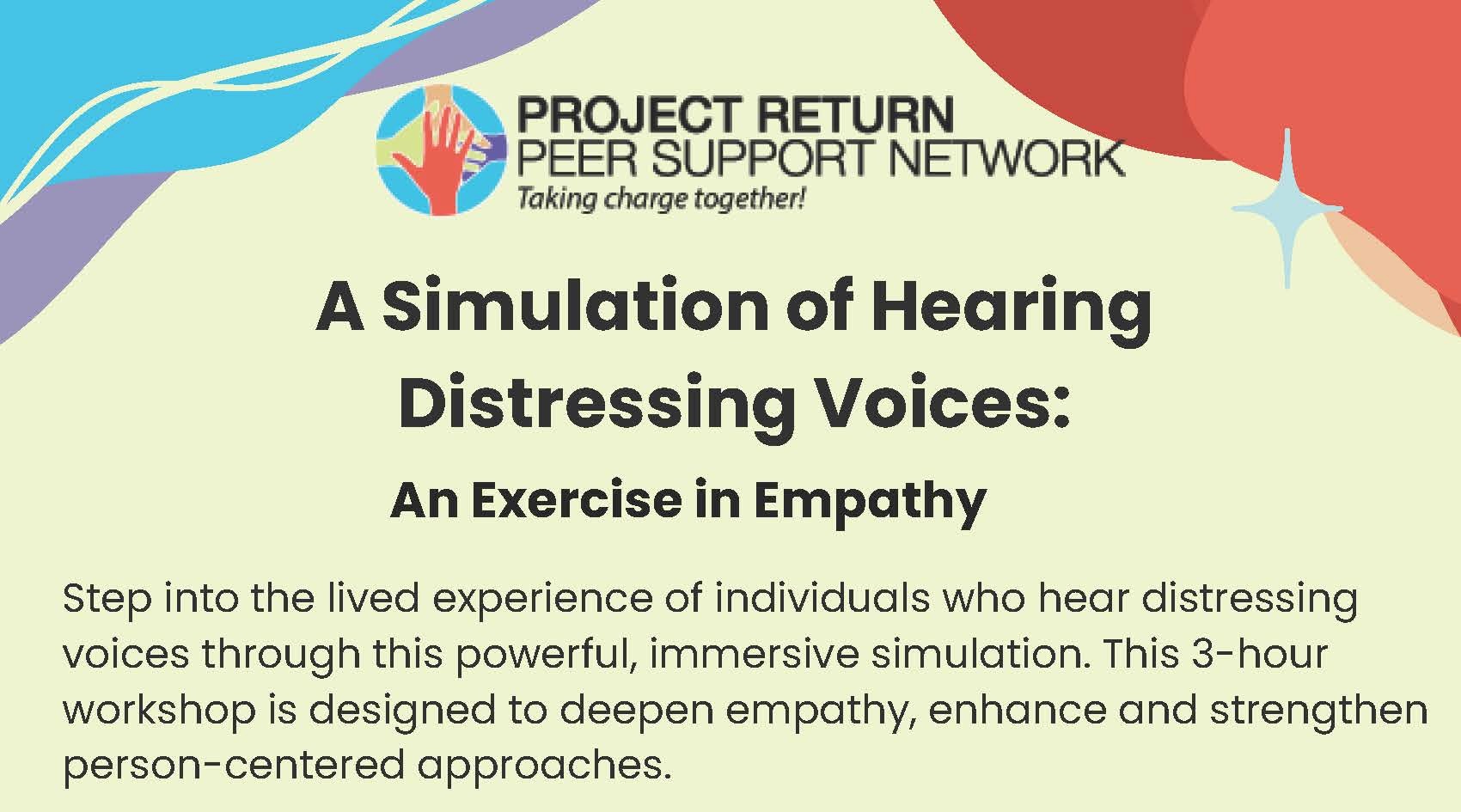
Project Return Peer Support Network (PRPSN) Provides certified WRAP training

CASRA member agency Project Return Peer Support Network (PRPSN) is now a licensed Wellness Recovery Action Plan (WRAP). PRPSN's Training Institute is now a leading provider of WRAP Seminars across the West Coast, helping individuals and organizations build wellness tools that foster hope, personal responsibility, and empowerment.

 For more information or to schedule a WRAP Seminar, please contact PRPSN's Training Coordinator, Gustavo Limas at glimas@prpsn.org.


Learn More

Final Thoughts

In recognition of
International Day of the World’s Indigenous Peoples, August 9th

“We are what we imagine. Our very existence consists in our imagination of ourselves. Our best destiny is to imagine, at least, completely, who and what, and that we are. The greatest tragedy that can befall us is to go unimagined.”

N. Scott Momaday
novelist, essayist, short story writer, and poet


Previous | Next