California Association of Social Rehabilitation Agencies
Newsletter | March 19, 2026
Highlights and Spotlights

Welcome to the CASRA Newsletter

In this issue:

-The challenge accessing emergency care for unhoused persons

-Why mental health is not the same for everyone

-Despite promises, veterans in need of mental health care are left flailing

-An opinion on how California can make mental health strides

Enjoy!


If you have news you would like to share or a colleague you would like to spotlight because of the great work they do or just because they are a great person or both, let us know by contacting joe@casra.org.

CASRA Member Agency Learning Opportunities

A benefit of membership in CASRA is receiving four hours of training for your staff. For more information, please contact joe@casra.org


If you are a CASRA member agency and would like to advertise your learning opportunity, training or event for the benefit of other CASRA member agencies, please contact us at events@casra.org.
There are a few guidelines:
-You are a CASRA Member Agency
-Your event is free of charge
and, as a reminder the Newsletter is published on the 1st and 3rd Thursdays of the month

Photo Gallery

A Photo Gallery now resides on the EVENTS page of the CASRA website and currently consists of albums of the 2024 Spring and the 2025 Fall CASRA Gatherings. We plan on adding more albums in the future.

If you have photos of your agency's events you would like to share with other CASRA members, contact joe@casra.org.

To view the current albums in the Photo Gallery, CLICK HERE.

CASRA Learning Library

The  CASRA Learning Library and its contents are free to CASRA member organizations and their staff. The Library is located in the Member Portal on the CASRA website here. More detailed instructions on how to access and use the Library can also be found on the CASRA website when logged on the Portal.

Our hope is that the Library's offerings will provide learning opportunities that will serve as part of CASRA agencies' onboarding processes for new staff, as well as be a resource of Recovery oriented values and practices for all staff. 

Access to the Learning Library is currently limited to CASRA member agencies and their staff. We hope to expand availability in the future.

For questions and more information contact Joe Ruiz - joe@casra.org.

CASRA Member Agency Employment Opportunities and Information

Our member agencies are continually looking for new employees or volunteers to join their workforce.

To see current openings and find out additional information about CASRA Member Agencies, please click below.

CASRA Member Agency Support Groups

CASRA facilitates a number of support groups for people working at CASRA member agencies. The support groups provide people working in similar roles opportunities to share experiences, information, and challenges. They meet monthly for approximantely one hour. for more information contact the person listed for each group.

Social Rehabilitation Facilities (SRF)
Meets: First Tuesday of the month at 1 PM

Human Resources
Meets: First Thursday of the month at 11 AM

Employment/Vocational Rehabilitation Services
Meets: First Thursday of the month at 3 PM

For information regarding any of the above groups contact:
Chad Costello, chad@casra.org

Wellness Services (Well Talk)
The Wellness Services support group is now online. For more info contact Joe Ruiz, joe@casra.org

Who We Are

CASRA is a statewide organization of private, not-for-profit, public benefit corporations that serve clients of the California public mental health system.

Member agencies provide a variety of services that are designed to enhance the quality of life and community participation of youth, adults and older adults living with challenging mental health issues. Read more

Contact Us

The California Association of Social Rehabilitation Agencies

Mailing Address:
3350 E. 7th Street, #509
Long Beach, CA 90804

Email: casra@casra.org

Phone: (562) 343-2621

To reach us: use our Contact Form
Advocacy/Policy/News

When Emergency Care Is Out of Reach for Unhoused Patients

Federal Findings and Psychiatric Restructuring at Los Angeles General Raise Questions About EMTALA Compliance and Emergency Care

From invisiblepeople.tv
By Stephen Oduntan, March 11, 2026

When emergency rooms grow crowded or psychiatric services shrink, the consequences are not felt equally. For many unhoused Angelenos, the public hospital system is often their only access to medical and mental health care — making delays or capacity changes potentially life-threatening.

A recent series of federal findings, emergency room conditions, and the restructuring of psychiatric services at Los Angeles General Medical Center are raising questions about how the system serves its most vulnerable patients. Read More


Why Mental Health Is Not the Same for Everyone

From madinamerica.com
By John T. Maier, March 13, 2026

We are often told that mental health matters. A person ought to go to a psychotherapist, or to a psychiatrist, in order to improve her mental health. If a career or family choice is bad for someone’s mental health, then she ought not to make it. These are modern platitudes, and they guide our thinking about psychotherapy and psychiatry—the ‘mental health professions’—and about life more generally. Yet we are not always given an answer to a natural question: what exactly is mental health?

I became interested in this question in my first full-time job as a psychotherapist, in a Boston clinic working with adults with what is sometimes called ‘serious mental illness.’ A variety of people came into the clinic. We were affiliated with a prestigious Boston hospital, and were also located directly below a city shelter for the unhoused, so people came to us from the hospital, or from the shelter, or from some other route. Our clients were mostly men, of a fairly diverse range of ages and racial and ethnic identities. It was, in short, a somewhat typical city clinic for the treatment of serious mental illness. ‘Serious mental illness’ is something of a euphemism, or a catch-all term for individuals whose psychiatric conditions have an especially profound effect on their day-to-day lives. In the case of the clinic where I worked, this primarily meant that the clients I worked with had a diagnosis of schizophrenia.

That somewhat generic description of the people I worked with fails to capture the endless variety that I witnessed in the psychological lives of my clients. Some were remarkably content and involved in meaningful work and friendships—though few had paid employment and even fewer had long-term romantic relationships. Others were in one way or another discontent. This was sometimes due to symptoms of psychotic disorders such as persistent hallucinations or delusions, but just as often due to life problems such as difficulties with housing or insurance. Some were religiously observant and others were atheists. Some seemed to look forward to psychotherapy and engaged in it wholeheartedly, while others showed up begrudgingly if at all. In short, they were a varied group of people, just as any random assemblage of people would tend to be. Read More


Despite Promises, Veterans in Need of Mental Health Care Are Left Flailing Under Trump

From mindsitenews.org
By Courtney Wise, March 18, 2026

Since Trump’s return to office, an “always bad” staffing situation within the Department of Veterans Affairs is now “at a breaking point,” according to one of dozens of veterans and mental health clinicians who spoke to ProPublica for its investigation of declining mental health services in the military.

Perpetually understaffed, the VA lost roughly 500 psychologists and psychiatrists between January 2025 and 2026, with several interviewed attributing their exits to the Trump administration's anti-DEI policies and push for therapy staff to return to agency offices – despite many of those offices being unsuitable for confidential treatment.

“I was angry that veterans were in that position,” said Nancy McCarthy, a social worker and therapist who left the VA after 10 years and has since started her own practice. “I was angry that I was in that position. It just felt like an unnecessary thing to have to navigate.” Read More

Read the ProPublica Article


Opinion - How California Can Continue To Make Strides on Behavioral Health

From sacbee.com
By Darrell Steinberg, March 4, 2026

When we consider California’s behavioral health system, two opposing things are true: We’ve made historic advances and more progress in acknowledging, uplifting and funding mental health and substance abuse issues than at any period in my lifetime. Yet we still have miles to go to create systems and laws that assure quality access and care for more people in a still-broken system. Let’s start with the progress. We are in a period of unprecedented attention, investment and reform, with Gov. Gavin Newsom the first governor to make behavioral health a priority — and back it up with significant resources.

When I began working on the issue as a legislator more than three decades ago, behavioral health was not a focus. I was fortunate to be part of a shift that helped bring behavioral health to the center of state policy. Read More


If you or someone you know is considering suicide or self-harm, there are resources available to provide free and confidential support. Call 988 or the Teen Line at 1-800-TLC-TEEN or The Trevor Project at 1-866-488-7386 for LGBTQ young people.

Trainings/Conferences and other Learning Opportunities

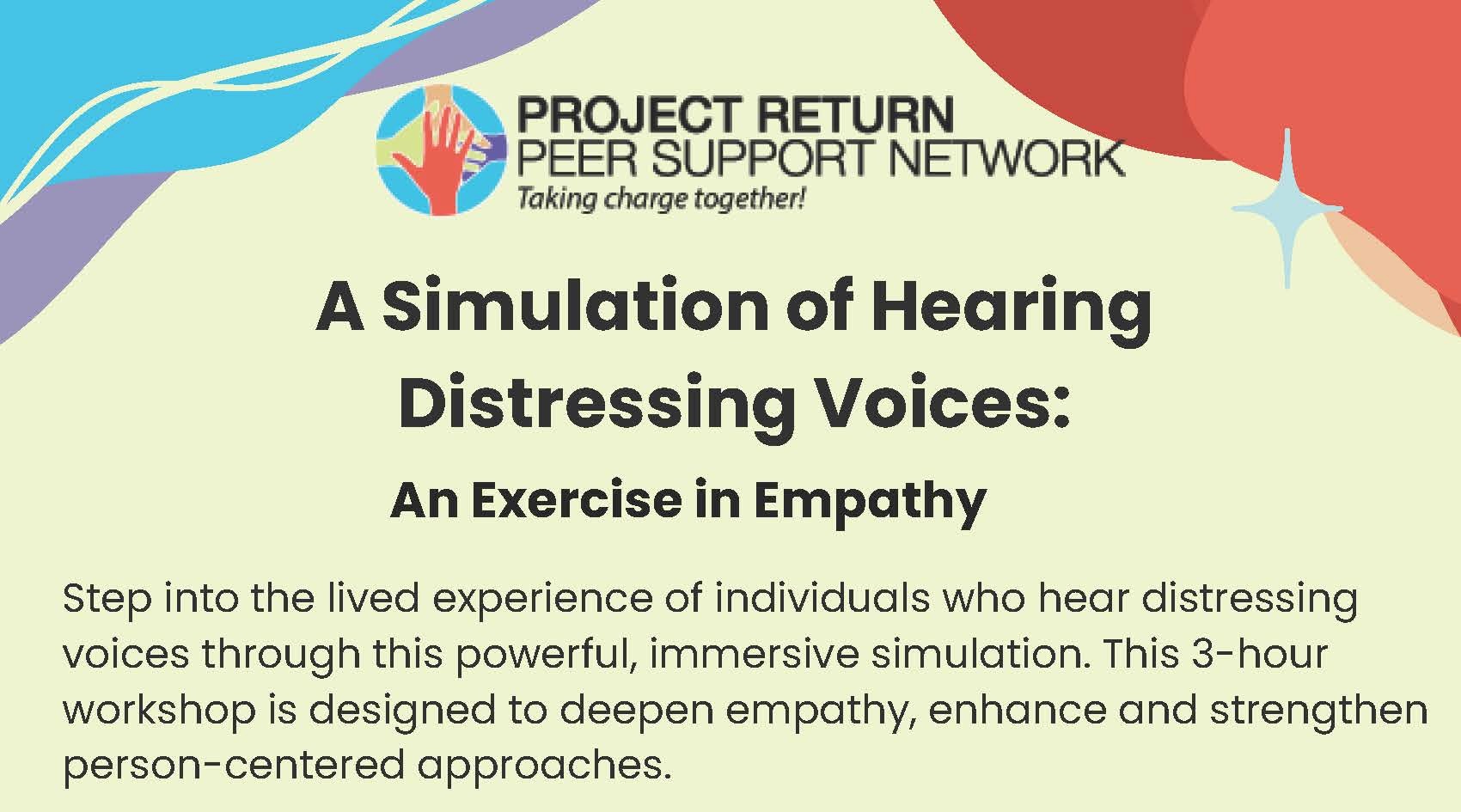
Project Return Peer Support Network (PRPSN) Provides certified WRAP training

CASRA member agency Project Return Peer Support Network (PRPSN) is now a licensed Wellness Recovery Action Plan (WRAP). PRPSN's Training Institute is now a leading provider of WRAP Seminars across the West Coast, helping individuals and organizations build wellness tools that foster hope, personal responsibility, and empowerment.

 For more information or to schedule a WRAP Seminar, please contact PRPSN's Training Coordinator, Gustavo Limas at glimas@prpsn.org.


Learn More

Final Thoughts

I write for those women who do not speak, for those who do not have a voice because they were so terrified, because we are taught to respect fear more than ourselves. We've been taught that silence would save us, but it won't.

Audre Lorde


Previous | Next